
Carpenter Ant Control in Metro Atlanta & North Georgia
Large black ants that excavate damp or damaged wood — often the sign of a moisture problem.
About Carpenter Ants in Georgia
Carpenter ants don't eat wood the way termites do — they hollow it out to build nests. But a colony can still weaken framing, window and door trim, decks and porch posts over time, especially where wood stays damp.
Finding the nest is the whole job. The ants you see in the kitchen at night may be traveling from a satellite nest in a wall void, a rotting fascia board or a decaying stump, so a thorough inspection is where we start.
Schedule Service Call (770) 914-6783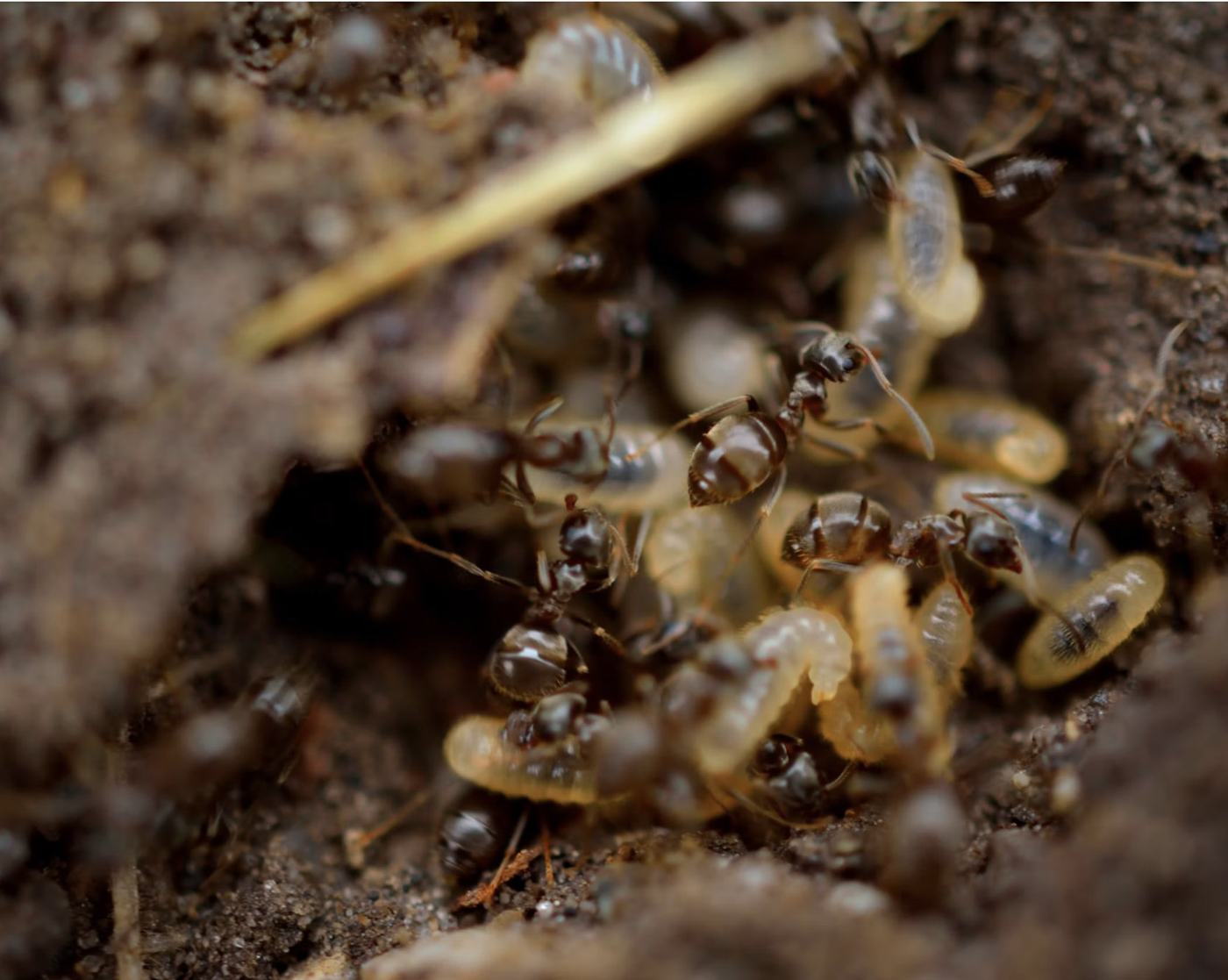
How to Identify Carpenter Ants
Carpenter ants are among the largest ants in Georgia, typically 1/4 to 1/2 inch, and are usually black or black and reddish-brown. Unlike termites, they have a narrowly pinched waist, elbowed antennae and, in winged forms, front wings longer than the rear wings.
Signs You May Have Carpenter Ants
- Piles of sawdust-like shavings, called frass, below small holes in wood
- Faint rustling or tapping sounds in walls
- Large black ants seen at night, especially near kitchens and bathrooms
- Winged ants appearing indoors in spring
- Hollow-sounding or blistered wood near windows, roof leaks or plumbing
Why Carpenter Ants Are a Problem in Georgia
Carpenter ants favor wood that has been softened by moisture, such as around leaky roofs, clogged gutters, window frames, sinks and dishwashers. Georgia's humidity and heavy summer storms create plenty of those conditions, and nearby trees and stumps provide parent colonies.
How Accurate Pest Solutions Handles Carpenter Ants
Inspect for the nest
We look for trails, frass, damp wood and likely satellite nests inside and outside.
Treat the colony
Treatment targets the nest and trails so the colony is reduced, not just the foragers.
Point out moisture sources
Fixing leaks and damp wood is part of keeping them away.
Re-check
Carpenter ants can have multiple nests, so follow-up matters.
Prevention Tips
- Fix roof, gutter and plumbing leaks promptly
- Replace water-damaged or rotting wood
- Keep firewood, lumber and debris away from the house
- Trim branches that touch the roof or siding
- Remove old stumps near the home
- Seal gaps where utility lines enter the house
Related Services
Ants
Odorous house ants, Argentine ants, pavement ants and more — trailing through kitchens and baseboards.
Learn more →Termite Control
Inspection and treatment to protect your home from subterranean termites.
Learn more →Carpenter Bees
Perfectly round holes in decks, eaves and fascia boards — and sawdust piles below.
Learn more →Carpenter Ants FAQ
How do I tell carpenter ants from termites?
Carpenter ants have a pinched waist and elbowed antennae; termites have a thick, straight waist and straight antennae. Carpenter ants push out wood shavings; termites leave mud tubes. A professional inspection can confirm which you have.
Do carpenter ants damage a house?
They can, over time, by hollowing out wood for their nests. The damage is usually slower than termite damage, but a mature colony in structural wood should not be ignored.
Why do I see them mostly at night?
Carpenter ants are most active at night, so sightings in the kitchen or bathroom after dark are common.
Is there a connection between carpenter ants and moisture?
Yes. Damp or decaying wood is where they most often nest, so a carpenter ant problem often points to a leak that should be fixed.
Where We Serve
We provide pest, termite, mosquito and wildlife control across 16 counties in Metro Atlanta and North Georgia. Find your city: